
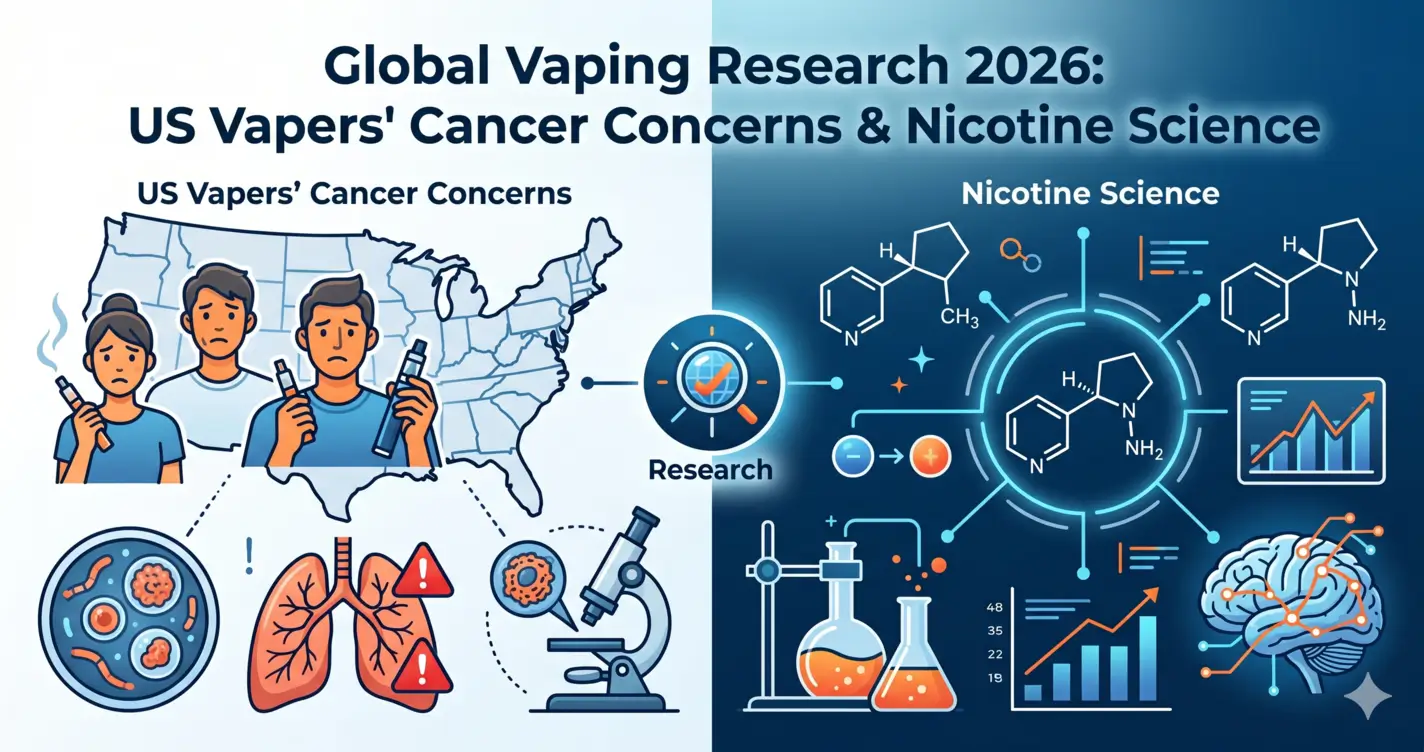
New York, May 25, 2026 — The landscape of vaping research has undergone a significant transformation over the past decade. What began as a theory about harm reduction has blossomed into a robust field supported by extensive data and scientific inquiry. For the millions of US vapers, understanding the latest findings on cancer concerns, the intricacies of nicotine science, and the proven effectiveness of vaping for smoking cessation is more critical than ever. This comprehensive overview of Global Vaping Research 2026 provides essential insights into the current scientific consensus, helping vapers make informed decisions about their health and lifestyle choices. As regulations and public perception continue to evolve, staying ahead of the curve on these vital topics ensures that the vaping community remains knowledgeable and empowered.
In This Article
- Global Vaping Research 2026: Addressing Cancer Concerns and Nicotine Science for US Vapers
- Understanding Vaping Health Risks: What US Vapers Need to Know
- Navigating the Regulatory and Industry Landscape for US Vapers
- The Science of Nicotine and Smoking Cessation: A 2026 Perspective
- What the Future Holds: Expert Analysis on Global Vaping Research 2026
- Stay Updated on Global Vaping Research 2026
Global Vaping Research 2026: Addressing Cancer Concerns and Nicotine Science for US Vapers
The year 2026 marks a pivotal moment in the ongoing dialogue surrounding electronic cigarettes. As the body of research continues to expand, the conversation has shifted from theoretical possibilities to concrete evidence derived from toxicology studies, clinical trials, and large-scale population surveys. These investigations consistently point to one overarching conclusion: vaping presents substantially lower risks compared to smoking traditional combustible cigarettes. While the debate is far from over, the current focus for researchers and public health officials is centered on two primary areas. The first delves into the potential for long-term health risks, such as cancer or respiratory issues, that might emerge from prolonged vaping. The second critically examines how effective vaping is as a tool for individuals seeking to quit smoking or reduce their exposure to harmful chemicals. Overall, the prevailing scientific consensus indicates that while vaping is not entirely risk-free, it plays a crucial role in smoking cessation and significantly lessens smoking-related harm for those who find it difficult to give up nicotine entirely.
A key area of concern for many is the question: “Does vaping cause cancer?” Studies that analyze biomarkers of inflammation in vapers, when compared to non-smokers, suggest that these inflammatory markers are considerably lower than those observed in cigarette smokers. The potential for long-term cancer risks associated with vaping has, understandably, been a subject of intense debate. A notable review by Australian researchers recently garnered significant attention, concluding that the laboratory evidence concerning vaping and cancer risk is substantial enough to warrant heightened concern. These researchers argued that studies examining the biological effects of e-cigarette aerosol exposure increasingly suggest a carcinogenic potential. However, it is crucial to note that these findings did not establish clear indicators of causation. In fact, experts in tobacco harm reduction consistently stress that, to date, there remains no definitive evidence indicating that vaping causes cancer in humans. The extensive research into smoking-related cancers spans decades, whereas widespread e-cigarette use is a relatively recent phenomenon. Oncologists and public health specialists generally characterize the current evidence as incomplete, but the research conducted thus far has consistently demonstrated that vaping poses a lower cancer risk than smoking traditional cigarettes.
This ongoing research is vital for informing both public health policy and individual consumer choices. The detailed examination of these studies, particularly those concerning the nuances of nicotine science and potential long-term health impacts, provides a clearer picture of vaping’s place in the harm reduction spectrum. As we continue to gather more data, the focus remains on providing accurate, evidence-based information to the public. For a deeper understanding of the scientific methodologies and findings, one can refer to comprehensive analyses like the one published on vapingpost.com, which highlights the global research landscape.
Understanding Vaping Health Risks: What US Vapers Need to Know
The latest Global Vaping Research 2026 offers critical insights into vaping health risks for the millions of US vapers navigating this evolving market. While the scientific community continues to investigate potential long-term effects, the current consensus strongly suggests that vaping is a significantly less harmful alternative to smoking traditional cigarettes. Studies examining biomarkers of inflammation, for instance, show lower levels in vapers compared to smokers, indicating a reduced inflammatory response. Despite some laboratory findings suggesting potential carcinogenic pathways, experts emphasize that there is no direct evidence linking vaping to cancer in humans to date. This distinction is crucial for US vapers who are seeking to reduce their exposure to the myriad of toxins found in cigarette smoke. The primary focus for many US vapers is understanding how these findings translate into tangible health benefits and what they mean for their daily lives. For those considering switching from smoking, resources like our comprehensive vaping guides can provide essential knowledge on making a successful transition and understanding device options.
The research also sheds light on nicotine science, clarifying that while nicotine is addictive, it is not the primary carcinogen in tobacco smoke. The thousands of toxic chemicals produced by burning tobacco are responsible for the vast majority of smoking-related diseases. Vaping, by contrast, heats a liquid to produce an aerosol that contains far fewer harmful chemicals. This fundamental difference is what underpins the harm reduction potential of vaping. For US vapers, this means that by switching to e-cigarettes, they are drastically reducing their exposure to cancer-causing agents and other dangerous compounds. It’s important for US vapers to stay informed about ongoing research, as the scientific understanding of vaping continues to deepen. The public health community, including organizations like the Centers for Disease Control and Prevention (CDC), is actively monitoring and evaluating the latest findings to provide guidance on vaping’s role in public health.
The Global Vaping Research 2026 findings arrive at a critical juncture for US vapers, as regulatory scrutiny and industry changes continue to shape the market. The U.S. Food and Drug Administration (FDA) remains the primary regulatory body overseeing tobacco and vaping products. The Premarket Tobacco Application (PMTA) process, established by the FDA, requires manufacturers to submit extensive scientific data demonstrating that marketing a new tobacco product would be appropriate for the protection of public health. This process has led to the authorization of some e-cigarette products while others have faced marketing denial orders. For US vapers, this means that the availability of certain products can change based on FDA decisions.
Beyond federal regulations, individual states and local municipalities often implement their own rules regarding the sale and use of vaping products, including flavor bans and restrictions on online sales. These varying regulations can create a complex environment for consumers trying to access their preferred products. The research highlighting vaping’s role in smoking cessation and its lower risk profile compared to smoking is often considered by policymakers, but the regulatory landscape is heavily influenced by a multitude of factors, including public health concerns and industry lobbying. Understanding the current FDA stance on e-cigarettes, which can be found on FDA.gov, is essential for US vapers to stay informed about potential product availability and market trends in 2026.
The Science of Nicotine and Smoking Cessation: A 2026 Perspective
The ongoing exploration of nicotine science continues to be a central theme in the Global Vaping Research 2026. While nicotine is the primary psychoactive compound in tobacco and is known for its addictive properties, current scientific understanding differentiates between the risks associated with nicotine itself and the far greater dangers posed by the combustion products of tobacco. Research consistently shows that the thousands of harmful chemicals generated when tobacco burns are the main culprits behind smoking-related diseases, including cancer and cardiovascular conditions. Vaping, by contrast, involves heating a liquid to produce an aerosol, which, according to numerous studies, contains a significantly reduced number of harmful constituents compared to cigarette smoke.
This distinction is paramount when considering vaping’s role in smoking cessation. For millions of smokers in the United States who have struggled to quit through traditional methods, vaping has emerged as a viable and effective alternative. The 2026 research reinforces the evidence that vaping can help individuals reduce their cigarette consumption and, in many cases, achieve complete abstinence from smoking. By providing a less harmful way to satisfy nicotine cravings, vaping allows users to gradually decrease their reliance on nicotine while avoiding the toxic exposure associated with combustible tobacco. This harm reduction approach is supported by a growing body of clinical trials and population surveys. For vapers seeking to understand the mechanics of their devices and optimize their experience, consulting detailed vape reviews can be incredibly beneficial.
What the Future Holds: Expert Analysis on Global Vaping Research 2026
Looking ahead, the Global Vaping Research 2026 findings suggest a continued trajectory toward greater understanding and acceptance of vaping as a harm reduction tool, albeit with ongoing scientific and regulatory challenges. Experts anticipate that future research will focus on refining our understanding of the long-term health impacts of specific e-liquid ingredients and aerosol components. The development of more sophisticated analytical techniques will likely yield even more granular data on the comparative risks of vaping versus smoking. From a public health perspective, the challenge remains to balance the potential benefits of vaping for smokers with the need to prevent uptake among non-smokers, particularly youth. This delicate balancing act will continue to inform regulatory decisions and public health messaging.
The industry itself is expected to continue innovating, with manufacturers striving to develop products that are both appealing to adult smokers seeking alternatives and meet evolving safety standards. The scientific community will play a crucial role in evaluating these innovations and providing evidence-based feedback. As the market matures, we can expect to see a greater emphasis on products that have undergone rigorous scientific review and received regulatory approval, such as those that have successfully navigated the FDA’s PMTA process. For individuals looking to make informed choices, staying updated on product performance and user experiences through resources like our reviews of popular devices, such as the Geek Bar Pulse, can be invaluable.
Frequently Asked Questions
What are the latest global vaping research findings for 2026 regarding cancer concerns for US vapers?
Global vaping research in 2026 indicates that while the long-term effects of vaping are still under investigation, current studies suggest a significantly lower cancer risk for vapers compared to traditional cigarette smokers. Biomarker studies show reduced inflammation, and experts emphasize there’s no direct evidence of vaping causing cancer in humans to date, though research is ongoing. The evidence points towards vaping being a substantially less harmful alternative when compared to combustible tobacco.
How does the 2026 global research impact US vapers’ perception of vaping health risks?
For US vapers, the 2026 global research reinforces the understanding that vaping is a significantly less harmful alternative to smoking. While not risk-free, the evidence points towards reduced exposure to carcinogens and a lower likelihood of developing smoking-related illnesses, including cancer, compared to continuing to smoke. This provides reassurance for those who have switched and encourages others to consider it as a harm reduction strategy.
What is the current scientific consensus on nicotine science and vaping in 2026?
Nicotine science in 2026 research continues to explore nicotine’s effects, but the focus remains on its addictive properties rather than direct carcinogenicity. Current studies differentiate between the risks of nicotine itself and the thousands of harmful chemicals present in combustible tobacco smoke. Vaping delivers nicotine with a vastly different and less harmful chemical profile, making it a tool for harm reduction rather than a direct cause of the most severe tobacco-related diseases.
Where can US vapers find the most up-to-date information on vaping research and regulations in 2026?
US vapers should consult reputable sources like The Vape Journal for the latest vape news and analysis. Official government health organizations such as the CDC and FDA also provide valuable, evidence-based information. Staying informed through credible news outlets and scientific publications is crucial for understanding ongoing research and regulatory changes that may affect product availability and legal use.
Stay Updated on Global Vaping Research 2026
The Global Vaping Research 2026 underscores a pivotal shift in understanding vaping’s role in public health. The evidence increasingly supports vaping as a substantially less harmful alternative to smoking, with ongoing research clarifying cancer concerns, nicotine science, and its efficacy in smoking cessation. For US vapers, this information is vital for making informed health decisions. The Vape Journal remains committed to providing comprehensive coverage of these developments. Check back regularly for the latest vape news and in-depth analysis as this critical field continues to evolve.