
FDA & Regulations
Breaking: FDA Just Approved Fruit-Flavored Vapes — Then Lost Its Commissioner
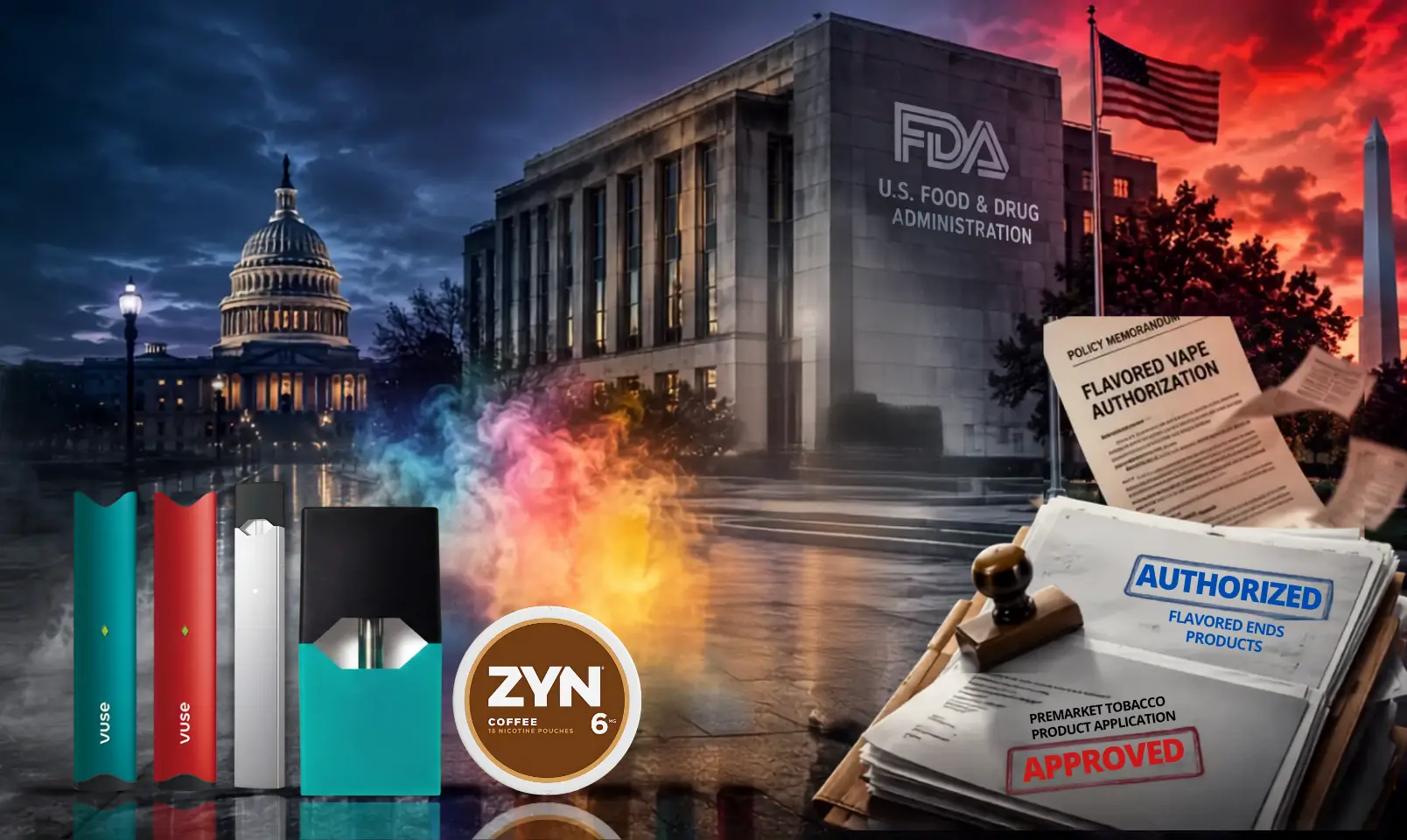
In the space of one week, the FDA authorized fruit-flavored vapes for the very first time in US history — then watched its commissioner resign. Here is every development reshaping the vaping landscape in 2026, and exactly what it means for you.
Washington, D.C. — June 10, 2026 — If you have been trying to keep up with vaping news lately, you are not imagining the chaos. The spring of 2026 has delivered a genuine policy earthquake to the US nicotine market — a landmark FDA flavor approval, a leadership shake-up at the top of the agency, a structural shift in what consumers are buying, a wave of state-level legislation, and one genuinely bizarre story from Oklahoma’s prison system.
Taken together, these are not routine developments. They represent the most consequential stretch of US vaping policy in years. Whether you are a daily vaper, a retailer, or simply someone who follows the FDA flavored vapes 2026 story closely, here is everything you need to know — explained clearly, without the spin.
The FDA's Historic Fruit Flavor Authorization — What Actually Happened
On May 5, 2026, the Food and Drug Administration did something it had never done before: it authorized the sale of fruit-flavored e-cigarettes to American adults.
The products come from Los Angeles-based Glas Inc., clearing the FDA’s premarket tobacco product application (PMTA) pathway. Two of the four authorized products are menthol variants — those have been approved before — but the other two are genuinely new territory. Marketed under the names “Gold” (mango) and “Sapphire” (blueberry), they mark the first time the agency has ever green-lit non-tobacco, non-menthol flavored e-cigarette products for legal sale in the United States, bringing the authorized list to roughly 45 e-cigarettes.
This is a significant policy reversal. For the better part of a decade, the FDA consistently rejected sweet and fruit flavor applications — a position the US Supreme Court unanimously backed in 2025. The Glas authorization does not just bend that position. It breaks it.
The Technology That Changed the Regulator's Mind
The pivotal factor was Glas’s age-gating system. Buyers must verify their identity using a government-issued ID, and the vape device only functions when actively paired via Bluetooth to the verified user’s phone. No phone pairing, no vapor. The FDA concluded this lockout mechanism, combined with strict marketing restrictions, was expected to meaningfully limit access by minors.
The agency also cited encouraging public health data: teen vaping rates in 2026 have dropped to roughly a ten-year low, weakening one of the central arguments against flavored product availability for adults.
“This is the FDA acknowledging, for the first time, that a flavored vape product can meet its benefit-risk standard for adult smokers — and that the right technology can change the calculus.”
— Industry Analysis, The Vape Journal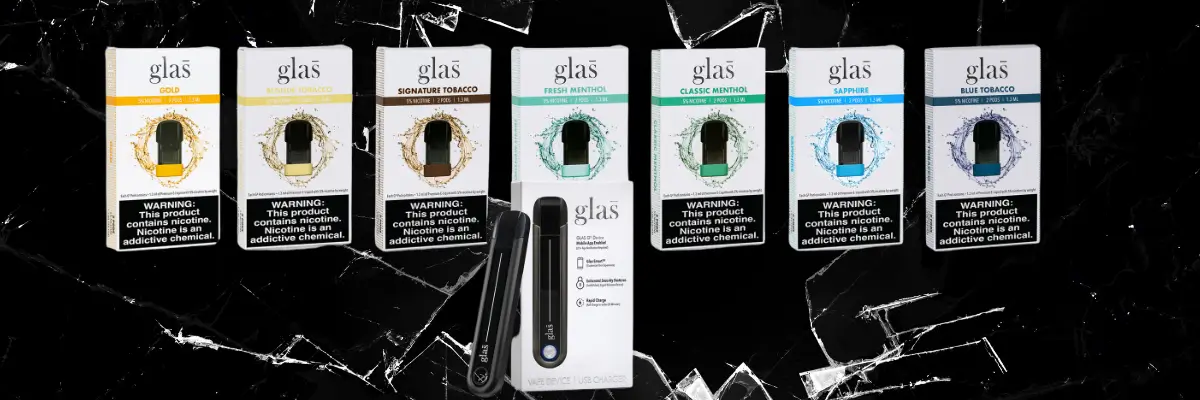
Who Really Pushed This Decision — and Why It Matters
The approval did not emerge purely from the FDA’s own review process. Reporting from the Wall Street Journal indicated that President Trump directly pressed then-Commissioner Dr. Marty Makary to clear the Glas products, and that the authorization moved ahead of where key parts of the agency’s leadership were comfortable.
Public health organizations were sharp in their criticism. Their core point: calling mango “Gold” and blueberry “Sapphire” does not change the flavor profile or its appeal. Fruit remains the category most strongly associated with underage vaping initiation. The criticism has merit — but so does the counterargument. The FDA’s Bluetooth age-gating requirement is more restrictive than anything currently applied to tobacco or alcohol products in the US.
Makary Resigns: What His Exit Means for FDA Flavored Vape Policy
One week after the Glas authorization, on May 12, 2026, FDA Commissioner Dr. Marty Makary resigned. His 13-month tenure was described by NPR and others as marked by persistent internal friction.
Multiple reports tied his departure directly to the flavored vape decision — suggesting he had not supported authorizing the fruit variants and that the political pressure to do so was a significant factor in his exit. He faced complaints from a remarkably wide coalition: drugmakers, physicians, anti-abortion groups, and vaping interests had all raised concerns at various points.
The administration named Kyle Diamantas — previously the FDA’s deputy commissioner for food — as acting commissioner. The permanent position remains vacant and federal tobacco enforcement direction remains genuinely unsettled.
Why the Leadership Vacuum Is a Problem for Vapers
Leadership transitions at the FDA are never neutral for the vaping industry. The pace of PMTA reviews, the enforcement posture toward illegal imports, and whether the Glas authorization signals a broader opening or a one-off political decision — all depend on who runs the agency and what they prioritize.
A leadership vacuum on top of an already-thinned career staff means slower decisions, more uncertainty for manufacturers with pending applications, and limited ability to respond to the flood of unauthorized disposable products. For anyone following FDA flavored vapes 2026 developments, this is the period of maximum uncertainty.
Nicotine Pouches Are Quietly Taking Over — And the Numbers Prove It
While the FDA flavored vape story dominated headlines, the bigger structural shift in the US nicotine market in 2026 has been happening quietly at the convenience store counter. Nicotine pouches — ZYN, On!, VELO — have posted double-digit volume growth this year, while the overall e-cigarette segment has been flat to slightly negative.
The reasons are consistent: pouches are discreet, produce no vapor or odor, are highly portable, and now come in a wide range of strengths and flavors. They work in offices, on planes, in restaurants — any environment where vaping is prohibited. For millions of adult nicotine users, that covers most of their daily life.
This is not a temporary trend. Reynolds American expanded its Tobaccoville facility specifically to increase pouch production — a major capital commitment to the category. Distributors treating modern oral nicotine as a secondary shelf item are increasingly treating it as a core growth line.
State Laws Are Filling the Federal Void — Here Is What Is Changing
With federal enforcement of unauthorized vaping products widely seen as inconsistent, states have accelerated their own enforcement infrastructure. The tool of choice is the “directory” or “registry” law — legislation that conditions retail legality on inclusion in a state-maintained list of approved products based on FDA PMTA status.
South Carolina and New York Lead the Latest Wave
South Carolina’s S.287 cleared the legislature in February 2026, adding the state to roughly 15 others operating registry-style laws. The Attorney General administers the directory, and products without compliance status face removal orders.
In New York, Governor Hochul folded a vapor registry into her FY2027 executive budget alongside a proposed 55-cent-per-unit distributor tax and an extension of tobacco-level taxation to nicotine pouches. The stated rationale is enforcement against contraband. Convenience store groups counter, not without evidence, that aggressive taxation tends to push demand toward untaxed illegal channels.
Consumer advocacy groups including CASAA oppose the directory approach broadly, arguing it disproportionately favors large, already-authorized manufacturers over independent retailers and smaller brands — a legitimate concern about the competitive effects of compliance-based gatekeeping.
Oklahoma Prisons Now Sell Vapes — And the Story Is More Interesting Than It Sounds
In early March 2026, the Oklahoma Department of Corrections began selling sealed disposable vapes and nicotine pouches through prison canteens, priced around $11.50. Combustible cigarettes, banned for a decade, remain prohibited.
DOC Director Justin Farris explained the logic directly: debt drives violence in correctional settings, and contraband drives debt. Making non-combustible nicotine legally available through official channels aims to undercut the informal economy that fuels prison violence.
The “national first” framing circulating in media coverage needs a correction: Pennsylvania’s state prison system has permitted vape canteen purchases since 2019, making Oklahoma second. But the trend it reflects matters regardless of the numbering — a growing institutional acceptance that non-combustible nicotine products are a workable harm-reduction tool where smoking is banned.
What All of This Means for US Vapers in 2026
Step back from the individual developments, and a coherent picture emerges. The FDA flavored vapes 2026 decision represents a genuine crack in a previously rigid federal stance — but it was made under political pressure, by a commissioner who has now resigned, and will be interpreted by an acting commissioner with no permanent mandate.
Meanwhile, states are building enforcement infrastructure that will outlast any individual federal administration. Directory laws are sticky — once enacted, they create compliance requirements that persist regardless of who is in the White House. The practical compliance burden is increasingly a state-by-state patchwork, not a single federal standard.
The pouch trend is real and structural, but it does not mean vaping is dying — it means the nicotine landscape is diversifying. The FDA authorization, limited as it is, suggests that adult-focused, technology-backed products have a viable regulatory pathway. That pathway is narrow and politically volatile right now, but it exists.
The summer of 2026 will be defined by who leads the FDA next, whether the Glas authorization opens any doors for other manufacturers, and how states translate new registry laws into actual enforcement. Watch all three.
Frequently Asked Questions
What flavored vapes did the FDA approve in 2026?
The FDA authorized four Glas Inc. products via the PMTA pathway in May 2026. Two are menthol. The other two — “Gold” (mango) and “Sapphire” (blueberry) — are the first-ever FDA-authorized fruit-flavored e-cigarettes in US history, bringing total authorized e-cigarettes to roughly 45.
Why did FDA Commissioner Makary resign in 2026?
Dr. Marty Makary resigned May 12, 2026 after 13 months. Reports tied his departure to friction over the fruit-flavor authorization, with accounts suggesting he had not supported clearing those specific products. Kyle Diamantas was named acting commissioner following his resignation.
Are flavored vapes now legal to buy in the US?
The Glas mango and blueberry products can be legally marketed to adults. However, the vast majority of flavored vapes remain unauthorized. State directory laws add another layer — products must appear on state registries in states with those laws, regardless of federal authorization. Always verify the status of specific products in your state.
What are state vape directory laws?
Directory laws require vaping products to appear on a state-maintained authorized list before they can be legally sold at retail. Roughly 15 US states operate these systems, including South Carolina following S.287 in February 2026. New York proposed a similar framework in its FY2027 budget alongside a 55-cent-per-unit distributor tax.
Jack Ledger
Senior Vape Industry Journalist — The Vape Journal
Jack Ledger covers vaping policy, nicotine harm reduction, and the global disposable vape market. Follow the latest at thevapejournal.com