
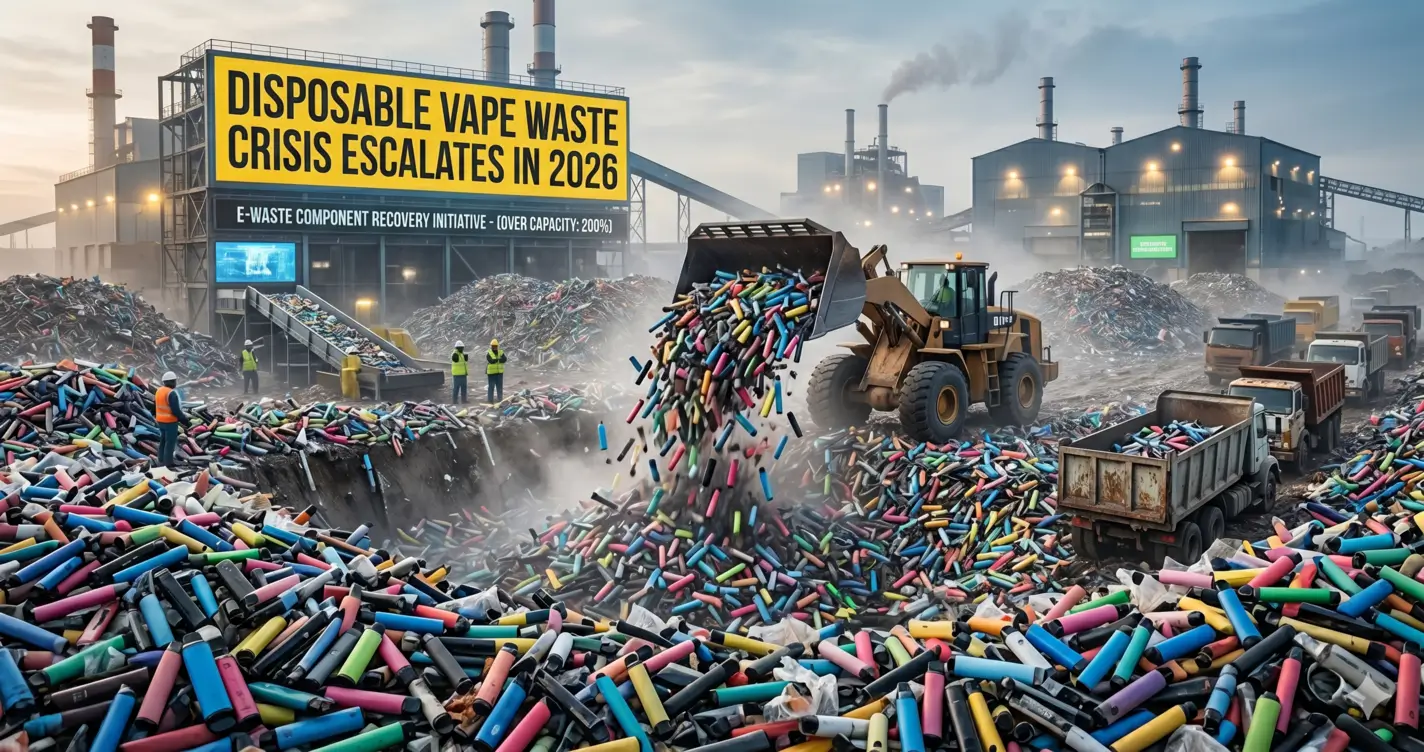
Washington D.C., May 26, 2026 — The escalating disposable vape waste crisis 2026 is no longer a distant concern but a pressing reality for communities and governments worldwide, including the United States. With millions of single-use e-cigarettes discarded monthly, the environmental, economic, and public safety implications are becoming impossible to ignore. This growing problem is forcing a re-evaluation of current vape products and regulations, with significant implications for US consumers. Understanding the scope of this crisis is crucial for vapers navigating the evolving landscape of the industry.
In This Article
The sheer volume of disposable e-cigarettes entering the market, coupled with their short lifespan and often improper disposal, has created a significant environmental burden. These devices, typically made from plastic and containing lithium-ion batteries, are contributing to landfill overflow and potential pollution of natural resources. As awareness grows, so does the pressure on regulators to address the disposable vape waste crisis 2026 head-on, potentially leading to widespread changes in product availability and consumer behavior across the nation.
The Growing Disposable Vape Waste Crisis 2026: A Global Problem
The disposable vape waste crisis 2026 represents a multifaceted challenge that spans environmental degradation, economic strain, and significant fire risks. As of mid-2026, the global consumption of disposable e-cigarettes has reached unprecedented levels. These devices, favored for their convenience and low entry price, are being discarded at an alarming rate, overwhelming waste management infrastructure in many regions. The core issue lies in the single-use nature of these products, which are designed for rapid consumption and disposal rather than longevity or recyclability.
IndexBox, a research and analytics firm, has highlighted the severity of this situation, noting the economic impact and increasing fire risks associated with the accumulation of this hazardous waste. The reliance on disposable vapes has created a linear “take-make-dispose” model that is fundamentally unsustainable. This trend is not confined to any single country; it is a global phenomenon driven by consumer demand and market strategies that prioritize disposability.
“The environmental consequences of disposable e-cigarettes are substantial, including plastic pollution and the improper disposal of batteries, which can leach harmful chemicals into the environment.” – IndexBox Summary
The batteries within disposable vapes are a particular concern. These are typically small lithium-ion batteries, which are highly flammable and can pose serious risks if damaged or mishandled. When discarded in general waste streams, they can be punctured or crushed, leading to thermal runaway and fires in waste collection trucks, sorting facilities, and landfills. This escalating hazard is a direct consequence of the disposable vape waste crisis 2026 and is prompting urgent calls for regulatory intervention.
Furthermore, the economic implications are significant. Municipalities are facing increased costs for waste management and cleanup. The valuable materials within these devices, particularly the batteries, are often lost to the waste stream instead of being recovered through proper recycling processes. This represents a missed economic opportunity and contributes to resource depletion. The overall picture is one of growing environmental damage, increased safety risks, and mounting financial burdens, all stemming from the widespread adoption of disposable vaping devices. For the latest insights and discussions surrounding this critical issue, you can refer to news.google.com.
Impact of the Disposable Vape Waste Crisis 2026 on US Vapers
The ramifications of the disposable vape waste crisis 2026 are direct and tangible for US vapers. As regulatory bodies grapple with the environmental and safety concerns, consumers can expect changes in product availability, potential price increases, and a heightened focus on responsible disposal practices. The convenience that has driven the popularity of disposable vapes is now directly linked to growing regulatory scrutiny, which could lead to bans or significant restrictions in certain states or even at the federal level.
Many US vapers have grown accustomed to the ease of use and low cost associated with disposable e-cigarettes. However, the hidden costs associated with their disposal are becoming increasingly apparent. This has led to a push for stronger US vape regulations that might favor reusable or more sustainable vaping options. Consumers may find that their preferred disposable brands become harder to find, or they may face higher prices as manufacturers or retailers are compelled to account for extended producer responsibility.
Understanding the disposable vape waste crisis 2026 also means recognizing the potential for increased enforcement of existing laws and the introduction of new ones. States and municipalities are already exploring or implementing measures to manage e-cigarette waste, which could include specific collection programs or outright bans on certain types of disposable devices. Vapers are encouraged to explore latest vape news to stay informed about these developing regulations.
For vapers who wish to continue using e-cigarettes but are concerned about the environmental impact, exploring reusable systems is becoming a more viable and responsible option. Devices like pod systems or vape pens that can be refilled and recharged offer a significantly reduced waste footprint compared to their disposable counterparts. This shift aligns with broader consumer trends towards sustainability and responsible consumption.
Regulatory and Industry Background on E-cigarette Waste
The regulatory landscape surrounding e-cigarettes has been evolving for years, with a primary focus on public health and preventing youth access. However, the growing disposable vape waste crisis 2026 has introduced a new, significant dimension to these discussions: environmental sustainability. The U.S. Food and Drug Administration (FDA) has the authority to regulate tobacco products, including e-cigarettes, under the Federal Food, Drug, and Cosmetic Act. While the FDA’s current regulations primarily address product standards, marketing, and health claims, the environmental impact of disposable vapes is increasingly on their radar.
The sheer volume of disposable vape waste, often containing plastic and lithium-ion batteries, presents a challenge that existing waste management systems are not equipped to handle efficiently. This has led to calls for extended producer responsibility (EPR) programs, where manufacturers are held financially and physically responsible for the collection, recycling, or disposal of their products at the end of their life cycle. Such programs are common for other consumer electronics but are still nascent in the vaping industry.
Several states and local governments have already begun to take action. Some have implemented bans on flavored disposable vapes, citing youth appeal, while others are exploring specific e-waste regulations for electronic nicotine delivery systems (ENDS). The federal government, through agencies like the Environmental Protection Agency (EPA), also plays a role in waste management policy. For comprehensive information on FDA regulations and policies, consulting FDA.gov is essential.
The industry itself is also facing pressure to adapt. While many manufacturers have focused on innovation and market expansion, the environmental consequences of disposable products are becoming a critical business risk. Companies that fail to address these concerns may face regulatory penalties, reputational damage, and loss of market share as consumers and regulators increasingly prioritize sustainability. The debate over the disposable vape waste crisis 2026 is pushing the industry towards more responsible product design and lifecycle management.
Expert Perspective: What Happens Next with Disposable Vapes?
From an expert perspective, the current trajectory suggests a significant shift away from disposable e-cigarettes is inevitable, driven by the undeniable disposable vape waste crisis 2026. While outright federal bans on all disposables might be complex due to existing legal frameworks, a combination of state-level restrictions, increased EPR mandates, and growing consumer awareness is likely to curb their dominance. Industry analysts predict that manufacturers will increasingly pivot towards rechargeable and refillable systems, or invest heavily in developing more easily recyclable disposable options if they are to remain competitive.
The economic incentives for change are also mounting. The cost of managing hazardous waste, potential fines for non-compliance with emerging regulations, and the reputational damage associated with being perceived as an environmental polluter are significant. Companies like Geek Bar and EB Design, which have seen immense popularity with their disposable lines, will need to demonstrate a commitment to sustainability or risk losing market share to more eco-conscious competitors. For vapers interested in making more sustainable choices, exploring vape reviews of reusable devices can provide valuable insights.
It is also plausible that we will see a rise in innovation focused on closed-loop recycling systems specifically for disposable vapes. However, the logistical challenges and costs associated with implementing such systems on a large scale are considerable. Therefore, the most likely near-term outcome is a gradual phasing out of the most problematic disposable models, replaced by alternatives that offer a better balance between convenience and environmental responsibility. This transition will be closely watched by consumers and regulators alike.
FAQ
Frequently Asked Questions
What is the main driver of the disposable vape waste crisis 2026?
The primary driver of the disposable vape waste crisis 2026 is the sheer volume of single-use e-cigarettes being discarded. Designed for convenience and low upfront cost, these devices are often used for a short period and then thrown away, overwhelming waste management systems and contributing to environmental pollution due to their plastic and battery components.
How does the disposable vape waste crisis 2026 affect US vape regulations?
The escalating disposable vape waste crisis 2026 is a significant factor pushing for stricter US vape regulations. Governments and regulatory bodies are increasingly concerned about the environmental footprint and potential safety hazards, leading to discussions and potential implementation of bans, stricter disposal guidelines, and enhanced producer responsibility laws for e-cigarette manufacturers and distributors.
What are the fire risks associated with disposable vape waste?
Disposable vapes contain lithium-ion batteries, which are a major fire risk when damaged or improperly disposed of. When these batteries are crushed, punctured, or exposed to heat in landfills or recycling facilities, they can short-circuit and ignite, leading to fires. This hazardous vape waste poses a significant threat to waste management infrastructure and public safety.
Are there specific brands or products contributing more to the disposable vape waste crisis 2026?
While the problem is widespread, popular brands that achieve high sales volumes, such as certain disposable models from EB Design (formerly Elf Bar) and Geek Bar, contribute proportionally more to the overall disposable vape waste crisis 2026 due to their market share. The focus is on the disposable format itself, rather than specific brands, as the core issue.
Stay Updated on Vape Sustainability
The disposable vape waste crisis 2026 underscores the critical need for more sustainable practices within the vaping industry. As regulations evolve and consumer awareness grows, staying informed is paramount. The environmental and economic impacts are too significant to ignore, and proactive measures are required from manufacturers, retailers, and consumers alike.
The Vape Journal is committed to providing comprehensive coverage of these developing issues. We encourage you to check back regularly for the latest vape news coverage and in-depth analysis as the industry navigates the challenges posed by disposable e-cigarette waste.